メインコンテンツ

運動モデリングと座標系

アレイおよびターゲットの軌跡モデリングの実行、座標変換の実行、およびドップラー シフトの計算。

Phased Array System Toolbox™ では、phased.Platform System object™ を使用して、レーダー、ソナー、ターゲット、ジャマー、または干渉源の動きをモデル化できます。この System object は、一定速度および一定加速度の運動モデルを提供します。これらの運動モデルは、ほとんどのタイプの軌跡を生成できます。phased.ScenarioViewer System object を使用して、レーダー シナリオの 3 次元可視化を表示できます。ツールボックスには、座標系間の変換、角度座標間の変換、速度とドップラー シフトの間の変換を行ういくつかのユーティリティ関数が含まれています。

オブジェクト

phased.PlatformModel platform motion
phased.ScenarioViewerDisplay motion of radars and targets

ブロック

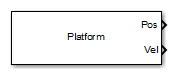
Motion PlatformMotion platform

関数

すべて展開する

dop2speedConvert Doppler shift to speed
speed2dopConvert speed to Doppler shift
radialspeedRelative radial speed
rangeangleRange and angle calculation
global2localcoordConvert global to local coordinates
local2globalcoordConvert local to global coordinates
rotxx 軸を中心とする回転のための回転行列
rotyRotation matrix for rotations around y-axis
rotzz 軸を中心とする回転のための回転行列
cart2sphvecConvert vector from Cartesian components to spherical representation
sph2cartvecConvert vector from spherical basis components to Cartesian components
azelaxesSpherical basis vectors in 3-by-3 matrix form
uv2azelConvert u/v coordinates to azimuth/elevation angles
azel2uv方位角/仰角から U/V 座標への変換
phitheta2azelConvert angles from phi/theta form to azimuth/elevation form
azel2phithetaConvert angles from azimuth-elevation form to phi-theta form
uv2phithetaConvert u/v coordinates to phi/theta angles
phitheta2uvConvert phi/theta angles to u/v coordinates

トピック

運動モデリング

  • Doppler Shift and Pulse-Doppler Processing
    Compute target motion using Doppler processing.
  • Motion Modeling in Phased Array Systems
    A critical component in phased array system applications is the ability to model motion in space. Such modeling includes the motion of arrays, targets, and sources of interference. For convenience, you can ignore the distinction between these objects and collectively model the motion of a platform.
  • Model Motion of Circling Airplane
    Start with an airplane moving along a circular track with a radius of 10 km at a horizontal speed of 100 m/s and descending at a rate of 1 m/sec. To create circular motion, specify a radially-inward acceleration and constrain the acceleration to lie in the horizontal plane. The acceleration of a body moving in a circle is v2r. The rate of descent is constant. Set the initial orientation axes matrix of the platform to the identity matrix.

座標系

  • Global and Local Coordinate Systems
    Learn about the local and global coordinate systems used in the toolbox.
  • Global and Local Coordinate Systems Radar Example
    This example shows how several different coordinate systems come into play when modeling a typical radar scenario. The scenario considered here is a bistatic radar system consisting of a transmitting radar array, a target, and a receiving radar array. The transmitting radar antenna emits radar signals that propagate to the target, reflect off the target, and then propagate to the receiving radar.
  • Rectangular Coordinates
    Construct a rectangular, or Cartesian, coordinate system for three-dimensional space by specifying three mutually orthogonal coordinate axes. The following figure shows one possible specification of the coordinate axes.
  • Spherical Coordinates
    Spherical coordinates describe a vector or point in space with a distance and two angles. The distance, R, is the usual Euclidean norm. There are multiple conventions regarding the specification of the two angles. They include:
  • Standards and Conventions
    This section introduces the concept of baseband signals and defines the local and global coordinate systems used in the toolbox.
  • Units of Measure and Physical Constants
    Phased Array System Toolbox uses the International System of Units (SI).