環境とクラッター
R2026bITU 大気モデルを適用する場合としない場合の、平面および曲面の地球モデル。レンズ効果の損失。レーダー伝播係数。海面状態と誘電率による海面特性評価。植生タイプと誘電率による地表面特性評価。偏波、グレージング角、および速度に依存する海と陸のクラッター。降雨による ITU および Crane 減衰モデル。雲と霧による ITU 減衰モデル。Gunn-East の雪モデル。
関数
トピック
- Two-Ray Multipath Propagation
A two-ray propagation channel is the next step up in complexity from a free-space channel and is the simplest case of a multipath propagation environment.
注目の例
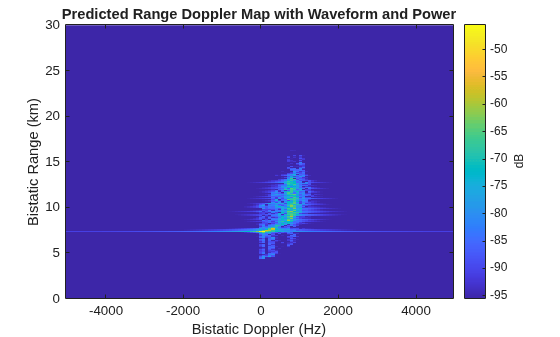
Bistatic Clutter Part 1: Rapidly Generate Clutter Channel FIR and I/Q Radar Data
Approximate the bistatic clutter impulse response of your radar system using
bistaticClutterSurfaceFIR and rapidly generate I/Q data.
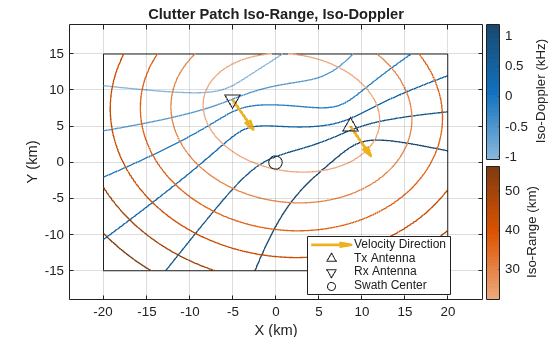
Bistatic Clutter Part 2: Visualize and Analyze the Clutter Response
Use bistaticClutterSurfaceFIR to rapidly explore how the
bistatic configuration and system parameters affect clutter returns.
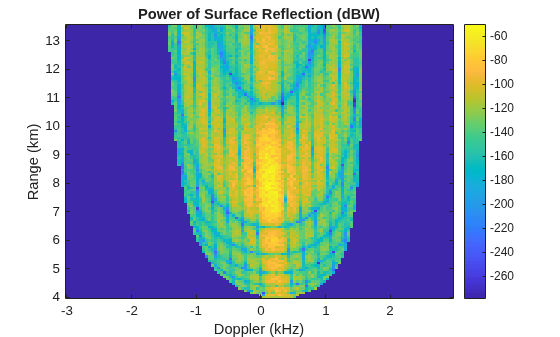
Predict Surface Clutter Power in Range-Doppler Space
Calculate the radar cross section (RCS) of surface clutter seen by a pulse-Doppler radar system.
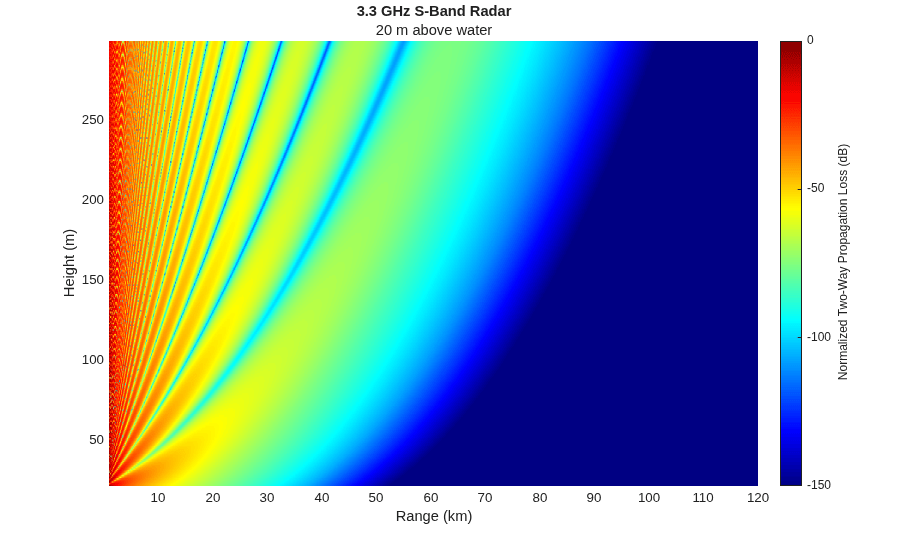
Modeling the Propagation of Radar Signals
Model RF propagation effects such as free space path loss, atmospheric attenuation due to rain, fog and gas, and multipath propagation due to bounces on the ground.
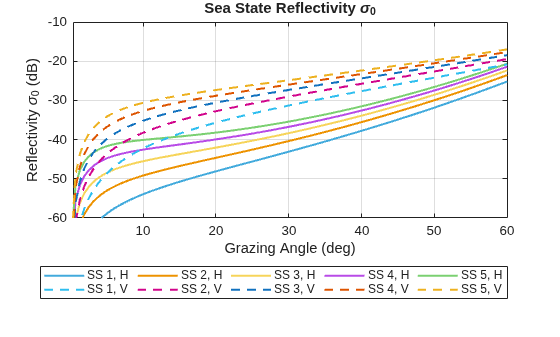
海上レーダーの海面クラッター モデリング
海上監視レーダー システムの海面クラッターをシミュレーションし、C/N 比 (CNR) を計算する。
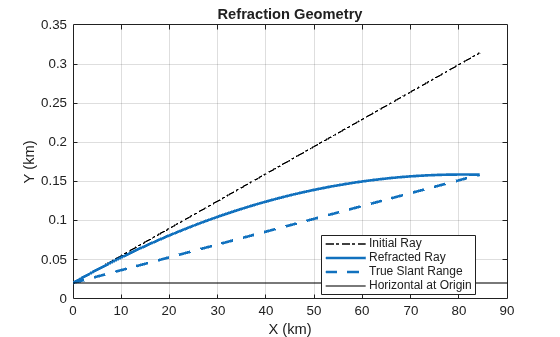
Modeling Target Position Errors Due to Refraction
Explore some environmental factors that are beyond a radar system designer's control and can result in losses and estimation errors.
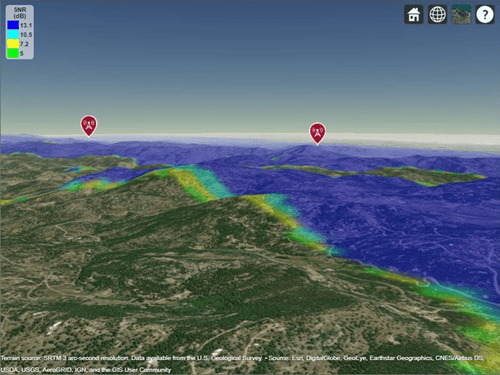
Planning Radar Network Coverage over Terrain
Plan a radar network using propagation modeling over terrain and use the radar equation to determine whether target locations can be detected.
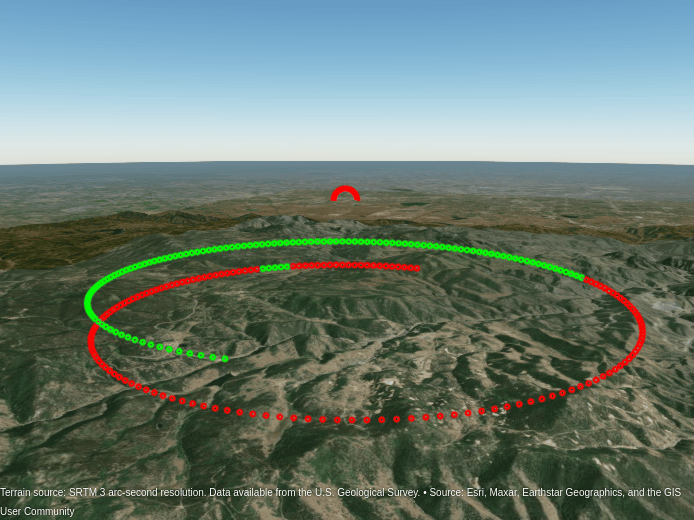
Radar Performance Analysis over Terrain
Analyze the performance of a ground-based radar tasked with detecting an aircraft in the presence of heavy, mountainous clutter to show how radar detection performance improves as target elevation increases above the terrain.
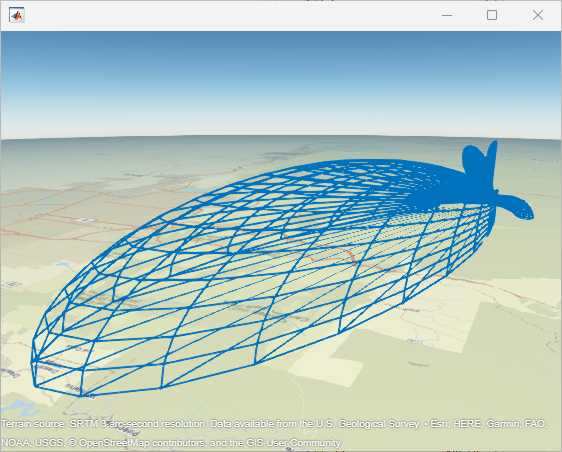
Radar Vertical Coverage over Terrain
Define an L-band radar system in the presence of heavy clutter and visualize its 3-dimensional vertical coverage over terrain.

