A plot with four subplots (quadrants)
古いコメントを表示
Hello,
I am working on a mood detection algorithm (from music) and I am currently stuck at the GUI.
I need to plot something similar to Thayer's arousal-valence emotion plane (four quadrants), here's what it looks like: Thayer
Now, it's not really technical, it's more about formatting the plot so it looks like that. I've tried everything I can but couldn't get to that result.
Basically what I need to do is this: if my function returns 1, a point would be plotted on the yellow panel (scatter plot maybe?), if answer is 2 - green, 3 - blue, 4 - red.
Is it possible? If it is, any idea of how I can do this?
Thank you in advance!
M.
3 件のコメント

Sara
2014 年 4 月 16 日
Do you need it to look like the picture or are you ok with having 4 plots? The point you're plotting, is it at a random location inside acolored box or at specific meaningful location? Would something like this work:
suplot(2,2,n)
plot(...)
where n is the number of the panel (1=red,2=yellow,3=blue,4=green in the figure you've posted).

Mihnea
2014 年 4 月 16 日
Sara
2014 年 4 月 16 日
You can use the quadrants of a classic plot: x>0,y>0 for yellow; x<0,y>0 for red and so on. In this way it's just one plot. And if you want to color the background, you can use the patch command.
採用された回答

Kelly Kearney
2014 年 4 月 16 日
There are several options of the file exchange to alter the spacing/margins/etc. of subplots (e.g. subaxis). Though for just 4 plots just using axes with the 'position' option should suffice:
l = [0.1 0.5; 0.1 0.5];
b = [0.5 0.5; 0.1 0.1];
c = {'r', 'y'; 'b', 'g'};
for ii = 1:4
ax(ii) = axes('position', [l(ii) b(ii) 0.4 0.4], 'color', c{ii});
end
その他の回答 (2 件)
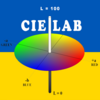
Image Analyst
2014 年 4 月 16 日
1 投票
If you have multiple subplots, you need to do some tricky stuff to get them close together. Why not just create an image and display that in a single axes control? Then put annotation over it with plot(), annotation(), text(), etc..
4 件のコメント
Mihnea
2014 年 4 月 16 日
Mihnea
2014 年 4 月 16 日
Image Analyst
2014 年 4 月 17 日
That's not what I was thinking, but that might work too. Just use patch() or fill() to put up a colored rectangle.
Mihnea
2014 年 4 月 17 日
Mihnea
2014 年 4 月 17 日
0 投票
3 件のコメント
Image Analyst
2014 年 4 月 17 日
Who's answer should you have put your answer under as a comment (Kelly or me)? Also, your link seems to be broken.
Kelly Kearney
2014 年 4 月 17 日
Assuming this comment applied to my solution, you can set the xcolor and ycolor properties to match your figure background. I'm assuming for now you're not interested in tick labels; if you need those it might require a bit more fiddling.
set(gcf, 'color', 'w');
set(ax, 'xcolor', 'w', 'ycolor', 'w', 'xtick', [], 'ytick', [])
Mihnea
2014 年 4 月 17 日
Community Treasure Hunt
Find the treasures in MATLAB Central and discover how the community can help you!
Start Hunting!
Translated by 

