supress high amplitude signal and only keep low amplitude

古いコメントを表示
i have a continuous positive signal which has a wave of high amplitude followed by a low aplitude i want to supress the high amplitude wave completely and only keep low amplitude signal
5 件のコメント

Wayne King
2013 年 3 月 4 日
Are these waves oscillating at the same rate (frequency) or different frequencies?

Juan Camilo Medina
2013 年 3 月 5 日
if both had the same frequency, then they will appear as the same wave with amplitude equal to the sum of the other two waves, and it would be indistinguishable.
Wayne King
2013 年 3 月 5 日
Not necessarily
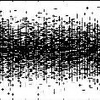
t = 0:0.001:1-0.001;
x = 2*cos(2*pi*100*t).*(t<=0.5);
y = 1/4*sin(2*pi*100*t-pi/8);
z = x+y;
plot(t,z)
Youssef Khmou
2013 年 3 月 5 日
編集済み: Youssef Khmou
2013 年 3 月 5 日
hi,@Wayne and @Juan : the Amplitudes are Completely added only if the signals have the same Frequency and same phase .
I reproduce Wayne s example ( modified ) :
t = 0:0.001:1-0.001;
x = 2*cos(2*pi*100*t);
y = 4*cos(2*pi*100*t-pi/8);
z = x+y;
plot(t,z)
x and y have the same Freq, but y contains a delay phase (pi/8) then Max(Z)=5.69 not 6 v .
Juan Camilo Medina
2013 年 3 月 5 日
編集済み: Juan Camilo Medina
2013 年 3 月 5 日
OK, if the phases are different, the result is not exactly the same wave with amplitude equal to the sum of the other two waves. But still, the result is a "single" wave with the same frequency but shifted and different amplitude. If that is what you have, try a Fourier type sine-cosine basis functions decomposition:
t = 0:0.001:1-0.001;
a=5; phi=-1/8; f=10;
x = a*sin(2*pi*f*t+phi); % origial"mixed" wave
figure(1); clf; plot(t,x); hold on;
% decomposition into fourier basis functions
y = (a*sin(pi/2+phi))*sin(2*pi*f*t);
z = (a*sin(phi))*cos(2*pi*f*t);
plot(t,y+z,'--r')
採用された回答
Juan Camilo Medina
2013 年 3 月 5 日
If they oscillate at different frequencies, you can create a high-pass filter, just read the help for the functions
[B,A] = butter(N,Wn,'high'); % this is just one of many filters types
Y = filter(B,A,X); % where X is your signal
その他の回答 (0 件)
カテゴリ
ヘルプ センター および File Exchange で Smoothing and Denoising についてさらに検索
Community Treasure Hunt
Find the treasures in MATLAB Central and discover how the community can help you!
Start Hunting!
Translated by 

