explode
R2026bExplode components in 3-D optical system visualization radially outward
Since R2026a
Description
Add-On Required: This feature requires the Optical Design and Simulation Library for Image Processing Toolbox add-on.
explode( explodes each component in the
optical system visualization osv)osv radially outward to enable you to
better visualize the internal structure of the optical system.
explode(
specifies properties for the explosion by using one or more optional name-value arguments.
For example, osv,Name=Value)ComponentTypes="Mirror" explodes only the mirror components
in the optical system radially outward.
Examples
Create a simple optical system.
opsys = opticalSystem;
addRefractiveSurface(opsys,Radius=9,Material=[1.74 25.4],DistanceToNext=3)
addRefractiveSurface(opsys,Radius=-9,DistanceToNext=10)
addImagePlane(opsys)
Visualize the optical system in 3-D.
osv3d = view3d(opsys,Title="Convex Lens")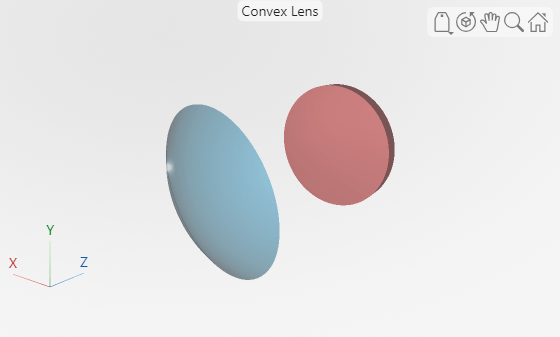
osv3d =
  OpticalSystemViewer3D with properties:

              Title: [0×0 string]
             Labels: "none"
          ClipAngle: 0
               Rays: [0×0 optics.ui.Rays3D]
    BackgroundColor: [0.9608 0.9608 0.9608]
      GradientColor: [0.9020 0.9020 0.9020]
             Parent: [1×1 Figure]

  Show all properties
Trace rays in the optical system to add to the visualization. Observe that rays contains three ray bundles.
rays = traceRays(opsys)
rays = 1×3 RayBundle array with properties:
    1×1 RayBundle    1×1 RayBundle    1×1 RayBundle
You can add only one ray bundle to a 3-D visualization. Add one of the ray bundles from the traced rays to the visualization.
addRays(osv3d,rays(1))
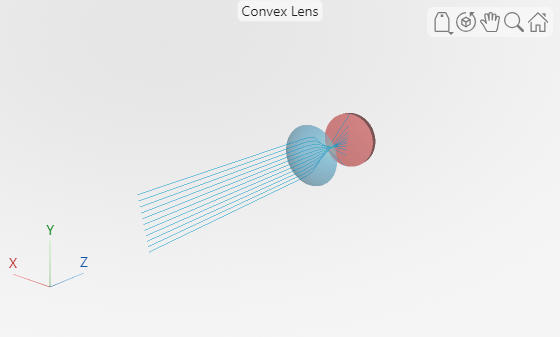
Explode the visualization. The explosion moves each component in the optical system visualization radially outward to enable you to better visualize the internal structure of the optical system.
explode(osv3d)
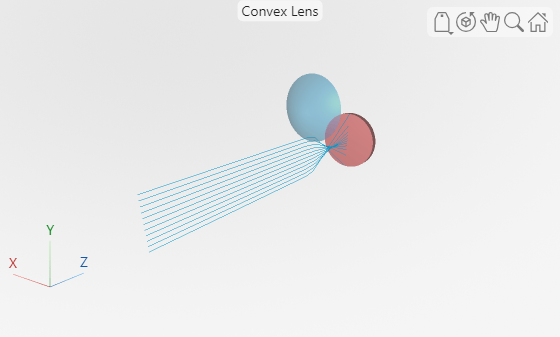
Restore the visualization to its state before the explosion.
unexplode(osv3d)
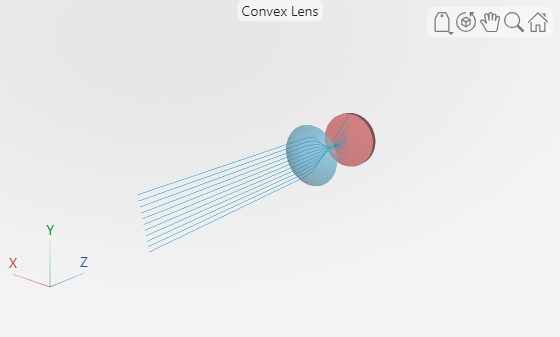
Show only the lens element, which is the first optical component, in the visualization.
showComponents(osv3d,1)
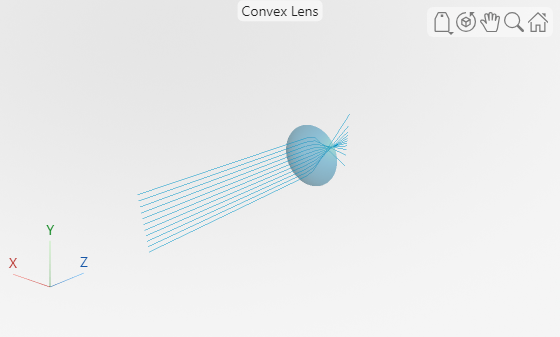
Remove the rays from the visualization.
removeRays(osv3d)
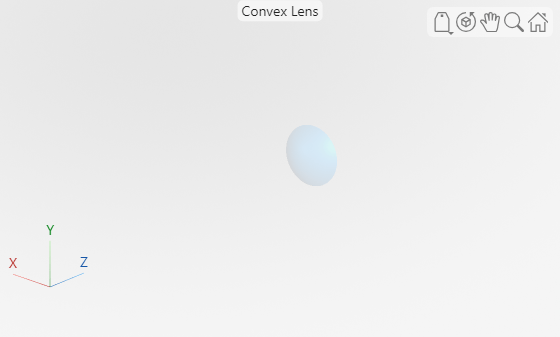
Add component labels to the visualization.
osv3d.Labels = "component";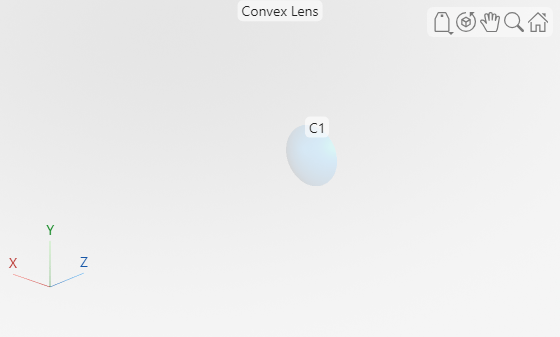
Input Arguments
Name-Value Arguments
Version History
Introduced in R2026a
See Also
OpticalSystemViewer2D | OpticalSystemViewer3D | addRays | removeRays | restore | showComponents

