parfor を使用したイメージ コントラストを改善するアルゴリズムの高速化
R2026bこの例では、イメージのコントラストを改善するために、イメージに簡単なヒストグラム均等化関数を適用する MATLAB® コードからスタンドアロンの C ライブラリを生成する方法を示します。例では、3 つの標準 RGB イメージ平面をそれぞれ個別のスレッドで処理するために parfor を使用しています。また、MATLAB コードがコードの生成に適していることを確認するために、C コードの生成前に MEX 関数を生成して実行する方法も示します。
MATLAB Coder™ は OpenMP (移植可能な共有メモリ並列プログラミング標準) を使用して parfor のサポートを実装します。The OpenMP API Specification for Parallel Programming を参照してください。MATLAB は複数のワーカー セッションを作成して parfor をサポートしますが、MATLAB Coder は OpenMP を使用して同一マシンで実行される複数のスレッドを作成します。
前提条件
並列処理をサポートするには、コンパイラが OpenMP の共有メモリ並列プログラミング標準をサポートしていなければなりません。コンパイラでのサポートがない場合でもこの例は実行できますが、生成されたコードは逐次実行となります。
関数 histequalize について
関数 histequalize.m はイメージ (N x M x 3 の行列として表現) を受け取り、コントラストが強調されたイメージを返します。
type histequalizefunction equalizedImage = histequalize(originalImage) %#codegen
% equalizedImage = histequalize(originalImage)
% Histogram equalization (or linearization) for improving image contrast.
% Given an NxMx3 image, equalizes the histogram of each of the three image
% planes in order to improve image contrast.
assert(size(originalImage,1) <= 8192);
assert(size(originalImage,2) <= 8192);
assert(size(originalImage,3) == 3);
assert(isa(originalImage, 'uint8'));
[L, originalHist] = computeHistogram(originalImage);
equalizedImage = equalize(L, originalHist, originalImage);
end
function [L, originalHist] = computeHistogram(originalImage)
L = double(max(max(max(originalImage)))) + 1;
originalHist = coder.nullcopy(zeros(3,L));
sz = size(originalImage);
N = sz(1);
M = sz(2);
parfor plane = 1:sz(3)
planeHist = zeros(1,L);
for y = 1:N
for x = 1:M
r = originalImage(y,x,plane);
planeHist(r+1) = planeHist(r+1) + 1;
end
end
originalHist(plane,:) = planeHist;
end
end
function equalizedImage = equalize(L, originalHist, originalImage)
equalizedImage = coder.nullcopy(originalImage);
sz = size(originalImage);
N = sz(1);
M = sz(2);
normalizer = (L - 1)/(N*M);
parfor plane = 1:sz(3)
planeHist = originalHist(plane,:);
for y = 1:N
for x = 1:M
r = originalImage(y,x,plane);
s = 0;
for j = 0:int32(r)
s = s + planeHist(j+1);
end
s = normalizer * s;
equalizedImage(y,x,plane) = s;
end
end
end
end
MEX 関数の生成
codegen コマンドを使用して MEX 関数を生成します。
codegen histequalizeCode generation successful.
C コードを生成する前に、MATLAB で MEX 関数をテストして、その関数が元の MATLAB コードと機能的に等価であることと実行時のエラーが発生しないことを確認しなければなりません。既定で、codegen は、現在のフォルダーに histequalize_mex という名前の MEX 関数を生成します。これにより、MATLAB コードと MEX 関数をテストして結果を比較することができます。
元のイメージの読み取り
標準の imread コマンドを使用してコントラストの低いイメージを読み取ります。
lcIm = imread('LowContrast.jpg');
image(lcIm);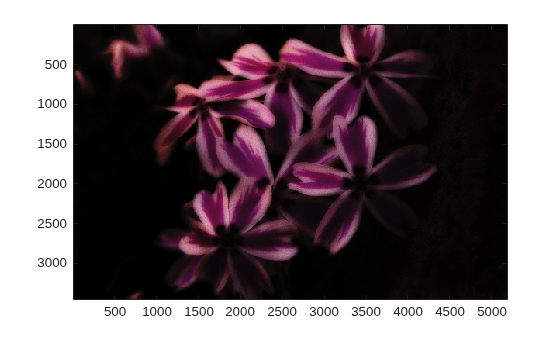
MEX 関数の実行 (ヒストグラム均等化アルゴリズム)
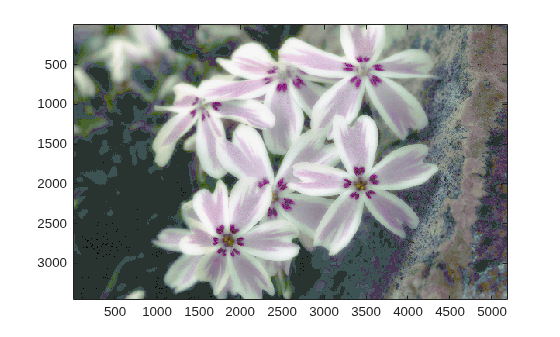
コントラストの低いイメージを渡します。
hcIm = histequalize_mex(lcIm);
結果の表示
image(hcIm);
スタンドアロン C コードの生成
codegen -config:lib histequalize
Code generation successful.
-config:lib オプションを指定して codegen を使用すると、スタンドアロン C ライブラリが生成されます。既定では、ライブラリ用に生成されたコードは codegen/lib/histequalize/ フォルダーにあります。
生成された関数の確認
生成されたコードには、複数のスレッドを使用してコードの並列処理を制御する OpenMP プラグマが含まれていることに注意してください。
type codegen/lib/histequalize/histequalize.c/*
* Prerelease License - for engineering feedback and testing purposes
* only. Not for sale.
* File: histequalize.c
*
* MATLAB Coder version : 26.2
* C/C++ source code generated on : 10-Jul-2026 10:17:59
*/
/* Include Files */
#include "histequalize.h"
#include "histequalize_data.h"
#include "histequalize_emxutil.h"
#include "histequalize_initialize.h"
#include "histequalize_types.h"
#include "minOrMax.h"
#include "omp.h"
#include <math.h>
#include <string.h>
/* Function Declarations */
static double computeHistogram(const emxArray_uint8_T *originalImage,
double originalHist_data[],
int originalHist_size[2]);
static void equalize(double L, const double originalHist_data[],
const emxArray_uint8_T *originalImage,
emxArray_uint8_T *equalizedImage);
static double rt_roundd_snf(double u);
/* Function Definitions */
/*
* Arguments : const emxArray_uint8_T *originalImage
* double originalHist_data[]
* int originalHist_size[2]
* Return Type : double
*/
static double computeHistogram(const emxArray_uint8_T *originalImage,
double originalHist_data[],
int originalHist_size[2])
{
double planeHist_data[256];
double L;
int tmp_size[3];
int M;
int N;
int loop_ub;
int plane;
unsigned int u;
unsigned int u1;
int x;
int y;
unsigned char tmp_data[24576];
unsigned char uv[3];
const unsigned char *originalImage_data;
unsigned char r;
originalImage_data = originalImage->data;
maximum(originalImage, tmp_data, tmp_size);
b_maximum(tmp_data, tmp_size, uv);
L = (double)c_maximum(uv) + 1.0;
originalHist_size[0] = 3;
originalHist_size[1] = (int)L;
N = originalImage->size[0];
M = originalImage->size[1];
#pragma omp parallel for num_threads(omp_get_max_threads()) private( \
r, x, y, planeHist_data, loop_ub, u, u1)
for (plane = 0; plane < 3; plane++) {
loop_ub = (int)L;
memset(&planeHist_data[0], 0, (unsigned int)loop_ub * sizeof(double));
for (y = 0; y < N; y++) {
for (x = 0; x < M; x++) {
r = originalImage_data[(y + originalImage->size[0] * x) +
originalImage->size[0] * originalImage->size[1] *
plane];
u = r + 1U;
if (r + 1U > 255U) {
u = 255U;
}
u1 = r + 1U;
if (r + 1U > 255U) {
u1 = 255U;
}
planeHist_data[(int)u - 1] = planeHist_data[(int)u1 - 1] + 1.0;
}
}
for (x = 0; x < loop_ub; x++) {
originalHist_data[plane + 3 * x] = planeHist_data[x];
}
}
return L;
}
/*
* Arguments : double L
* const double originalHist_data[]
* const emxArray_uint8_T *originalImage
* emxArray_uint8_T *equalizedImage
* Return Type : void
*/
static void equalize(double L, const double originalHist_data[],
const emxArray_uint8_T *originalImage,
emxArray_uint8_T *equalizedImage)
{
double normalizer;
double s;
int M;
int N;
int i;
int j;
int plane;
int x;
int y;
const unsigned char *originalImage_data;
unsigned char r;
unsigned char *equalizedImage_data;
originalImage_data = originalImage->data;
N = equalizedImage->size[0] * equalizedImage->size[1] *
equalizedImage->size[2];
equalizedImage->size[0] = originalImage->size[0];
equalizedImage->size[1] = originalImage->size[1];
equalizedImage->size[2] = 3;
emxEnsureCapacity_uint8_T(equalizedImage, N);
equalizedImage_data = equalizedImage->data;
N = originalImage->size[0];
M = originalImage->size[1];
normalizer = (L - 1.0) / ((double)originalImage->size[0] *
(double)originalImage->size[1]);
#pragma omp parallel for num_threads(omp_get_max_threads()) private( \
j, i, s, r, x, y)
for (plane = 0; plane < 3; plane++) {
for (y = 0; y < N; y++) {
for (x = 0; x < M; x++) {
r = originalImage_data[(y + originalImage->size[0] * x) +
originalImage->size[0] * originalImage->size[1] *
plane];
s = 0.0;
i = r;
for (j = 0; j <= i; j++) {
s += originalHist_data[plane + 3 * j];
}
s *= normalizer;
s = rt_roundd_snf(s);
if (s < 256.0) {
r = (unsigned char)s;
} else if (s >= 256.0) {
r = MAX_uint8_T;
} else {
r = 0U;
}
equalizedImage_data[(y + equalizedImage->size[0] * x) +
equalizedImage->size[0] * equalizedImage->size[1] *
plane] = r;
}
}
}
}
/*
* Arguments : double u
* Return Type : double
*/
static double rt_roundd_snf(double u)
{
double y;
if (fabs(u) < 4.503599627370496E+15) {
if (u >= 0.5) {
y = floor(u + 0.5);
} else if (u > -0.5) {
y = u * 0.0;
} else {
y = ceil(u - 0.5);
}
} else {
y = u;
}
return y;
}
/*
* equalizedImage = histequalize(originalImage)
* Histogram equalization (or linearization) for improving image contrast.
* Given an NxMx3 image, equalizes the histogram of each of the three image
* planes in order to improve image contrast.
*
* Arguments : const emxArray_uint8_T *originalImage
* emxArray_uint8_T *equalizedImage
* Return Type : void
*/
void histequalize(const emxArray_uint8_T *originalImage,
emxArray_uint8_T *equalizedImage)
{
double originalHist_data[768];
double L;
int originalHist_size[2];
if (!isInitialized_histequalize) {
histequalize_initialize();
}
L = computeHistogram(originalImage, originalHist_data, originalHist_size);
equalize(L, originalHist_data, originalImage, equalizedImage);
}
/*
* File trailer for histequalize.c
*
* [EOF]
*/

