How to make(create) a waveform in matlab as shown in the image
古いコメントを表示
Hello,
I am not sure of how to create the kind of waveform shown in the image below. I found a paper in which the author says that the pulse signal is corrupted with noise(motion) and LMS adaptive filtering is used for removing this kind of noise.
1)The signal after removing motion artifacts(noise) means the pure pulse signal is shown below

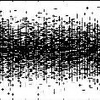
2)The waveform pulse signal with noise before filtering with LMS adaptive filtering is shown below.

I want to experiment the implementation in matlab and so I need the noise waveform to be created in the matlab.
can someone explain of how to generate the pulse signal(with noise) as above.
thanks.
2 件のコメント

Gova ReDDy
2014 年 1 月 1 日

Image Analyst
2014 年 1 月 1 日
編集済み: Image Analyst
2014 年 1 月 1 日
Explain what that means. Do you want to get the values by manually clicking on some chart like this? Or do you want us to recommend some kind of electronic instrument, a waveform generator, that can be used with the data acquisition toolbox to digitize the voltage? Do you want us to make some waveform like a sawtooth or sine wave or whatever, and add noise to it? After you read this again you need to rephrase your question.
採用された回答
Youssef Khmou
2014 年 1 月 2 日
編集済み: Youssef Khmou
2014 年 1 月 2 日
the first signal is similar to sawtooth signal, here is how to produce the signal :
t=0:0.01:10;
y=sawtooth(2*pi*t); plot(t,y)
axis([0 10 -5 5]); grid on
%snr=10;
%x=awgn(y,snr,'measured');
%figure, plot(t,x)
SNR=10; % 10dB
sigma=std(y)*10^(-SNR/20);
x=y+sigma*randn(size(t));
figure, plot(t,x);
10 件のコメント
Gova ReDDy
2014 年 1 月 2 日

Walter Roberson
2014 年 1 月 2 日
awgn is part of the Communications Toolbox.

This could be a little too wideband disturbance maybe. You could try to create a additive white gaussian noise (AWGN) vector (which is simply a set of normally distributed numbers and with mu = 0 some standard deviation sigma). Then you run this through a lowpass filter. That should slow down the noise frequency, this can then be added to the sawtooth. Try first a cut of frequency of around 1kHz and the increase or decrease it depending on how the wave looks. This is a bit complicated, but you could try to check out FIR filtering on wikipedia.
Gova ReDDy
2014 年 1 月 2 日
Youssef Khmou
2014 年 1 月 2 日
i edited the code, change the SNR to see the effect .
Gova ReDDy
2014 年 1 月 2 日
Youssef Khmou
2014 年 1 月 2 日
Gova, try with SNR=0dB. In general we can not know what type of noise is in the second figure, is it additive or multiplicative, Gaussian or uniform....
Gova ReDDy
2014 年 1 月 5 日
編集済み: Gova ReDDy
2014 年 1 月 5 日
Is there any other alternative method to create the second signal I mean adding different combinations of high frequencies to every 1000 values of y for the image below generated with this
t=0:0.001:10;
y=sawtooth(2*pi*t);
plot(t,y)
axis([0 10 -5 5]); grid on

Youssef Khmou
2014 年 1 月 6 日
Gova, you have many possibilities , here are some of them :
t=0:0.001:10;
y=0;
for n=1:10
y=y+sawtooth(2*pi*n*t);
end
plot(t,y)
The second one :
f=cos(2*pi*(0:0.001:1-0.001)); % frequency of 1Hz,
f=[f f f f f f f f f f];
f(end+1)=f(end);
z=y+f;
figure, plot(t,z);
Youssef Khmou
2014 年 1 月 6 日
try to use also the periodic Cardinal sinus function :
plot(diric((0:0.1:100),10))
その他の回答 (2 件)
Youssef Khmou
2014 年 1 月 6 日
You can also create a random signal, delete of the frequencies and transform it back to temporal domain:
x=randn(200,1);
fx=fft(x);
fx(50:350)=0;
X=abs(ifft(fx));
plot(X) % approaching the second signal
5 件のコメント
Gova ReDDy
2014 年 1 月 6 日
編集済み: Gova ReDDy
2014 年 1 月 6 日
Thanks for your different methods of creating the signals. I tried like this
x=randn(10001,1);
fx=fft(x);
fx(300:10001)=0;
X=abs(ifft(fx));
plot(X);hold on; %noise signal
t=0:0.001:10;
y=sawtooth(2*pi*t);
p=y(:,1:10001);
p1=p'+X;%addign noise to the sawtooth
plot(p1,'-r');

But is there any possibilty of creating the signal very similar to the second signal in the image as I want this for testing the Least mean square adptive filtering beacuse I tried the LMS adaptive filtering for my pulse signal coming from teh designed analog baord and was not able to filter the motion artifacts from the pulse signals ,which was also posted many times in the mathworks forum but no one was replying to it .Then I thought no one is familiar with LMS adtive filtering and want to try myself with creating artificial as shown in the first image and want to know whether LMS can work for this or not so that it can be applied for my signal coming from analog board. Thanks.
Youssef Khmou
2014 年 1 月 6 日
my knowledge is limited in this case, you can delete and repost the question for other users. cordially .
Gova ReDDy
2014 年 1 月 6 日
Image Analyst
2014 年 1 月 6 日
You "also posted many times in the mathworks forum but no one was replying to it ." might indicate that no one here knows about your topic, and that posting many times again will yield similar non-results.
Gova ReDDy
2014 年 1 月 6 日
Gova ReDDy
2014 年 1 月 9 日
編集済み: Gova ReDDy
2014 年 1 月 9 日
0 投票
カテゴリ
ヘルプ センター および File Exchange で Analog Filters についてさらに検索
製品
Community Treasure Hunt
Find the treasures in MATLAB Central and discover how the community can help you!
Start Hunting!
Translated by 

