投影
R2026b学習データの典型的なデータ セットを使用し、層の活性化に対して主成分分析 (PCA) を実行し、層の学習可能なパラメーターに対して線形投影を適用することによって、層を投影します。投影された深層ニューラル ネットワークのフォワード パスは、通常、ライブラリを使用せずに C/C++ コードを生成して組み込みハードウェアにネットワークを展開すると、より高速になります。
Deep Learning Toolbox™ Model Compression Library で利用可能な圧縮手法の詳細な概要については、Reduce Memory Footprint of Deep Neural Networksを参照してください。
関数
compressNetworkUsingProjection | Compress neural network using projection (R2022b 以降) |
neuronPCA | Principal component analysis of neuron activations (R2022b 以降) |
unpackProjectedLayers | Unpack projected layers of neural network (R2023b 以降) |
ProjectedLayer | Compressed neural network layer using projection (R2023b 以降) |
gruProjectedLayer | Gated recurrent unit (GRU) projected layer for recurrent neural network (RNN) (R2023b 以降) |
lstmProjectedLayer | Long short-term memory (LSTM) projected layer for recurrent neural network (RNN) (R2022b 以降) |
トピック
- Compress Neural Network Using Projection
Compress a neural network using projection and principal component analysis (PCA).
- Train Smaller Neural Network Using Knowledge Distillation
Reduce the memory footprint of a deep neural network using knowledge distillation. (R2023b 以降)
注目の例
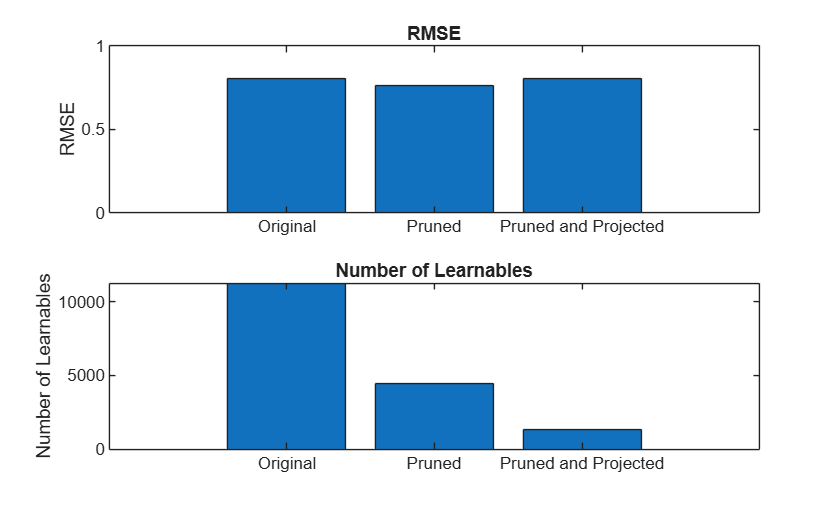
Analyze and Compress 1-D Convolutional Neural Network
Analyze 1-D convolutional network for compression and compress it using Taylor pruning and projection.
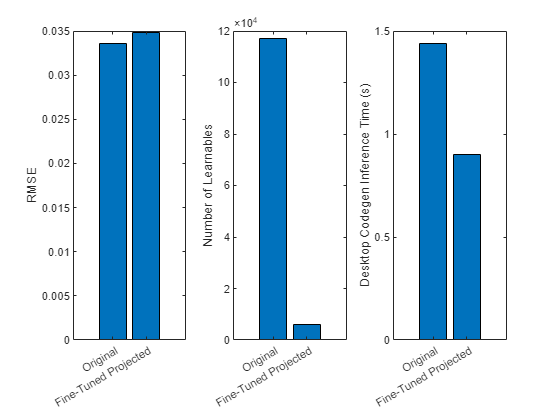
Evaluate Code Generation Inference Time of Compressed Deep Neural Network
Compare the inference time of a compressed deep neural network for battery state of charge estimation.

